




Do these problems sound familiar?

Services are managed by complex spreadsheets

Limited data available on existing services

Too much time spent on manual tasks
Greater control of operations

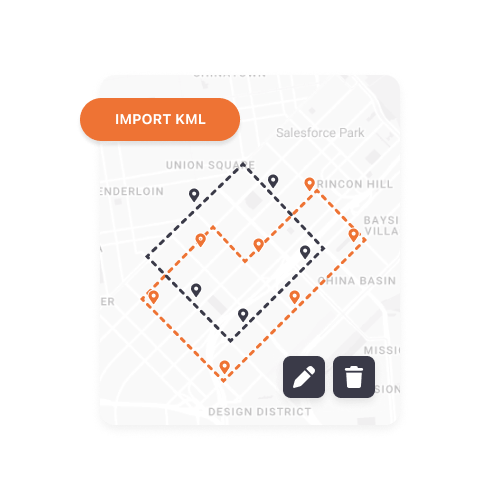
Maximise performance
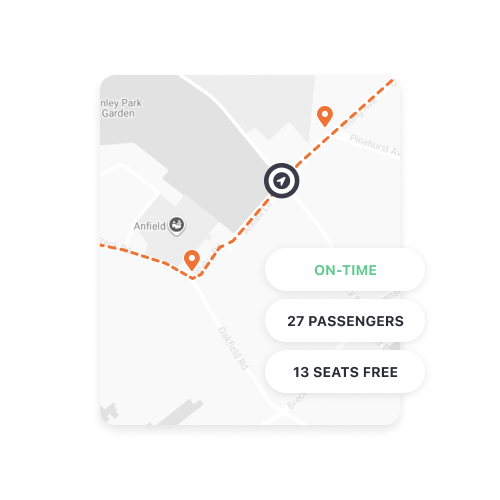
Intuitive user experience
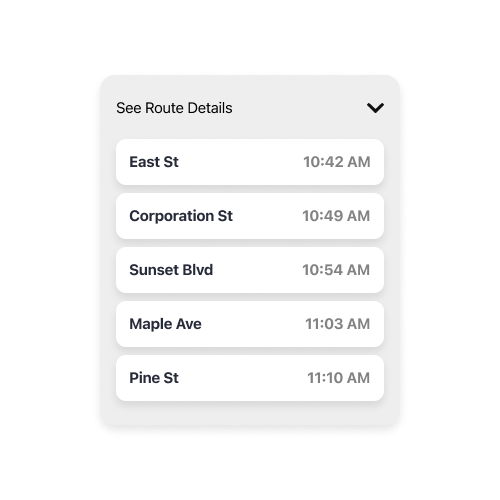

Seamless integration with Demand-Responsive Transport
Liftango can also integrate with on-demand transport, increasing coverage and ridership while protecting your best-performing fixed buses.
Key features of our Fixed-Route solution

Co-designed with real fleet operators
A platform designed with fleet operators, ensuring real problems have been tackled.

Respond faster
Multiple options to communicate with drivers, operations staff and passengers.

Automate your manual tasks
Optimised route creation, recurring driver scheduling and vehicle assignment.

Build trust with your passengers
Letting you efficiently manage passenger inquiries and provide timely solutions.
Simple, interactive and intuitive
We’ve improved your workflow, so you spend less time on recurring daily tasks.

Implementation and ongoing service support
Deploy confidently and realise results fast. We pride ourselves on supporting our partners through the entire process.
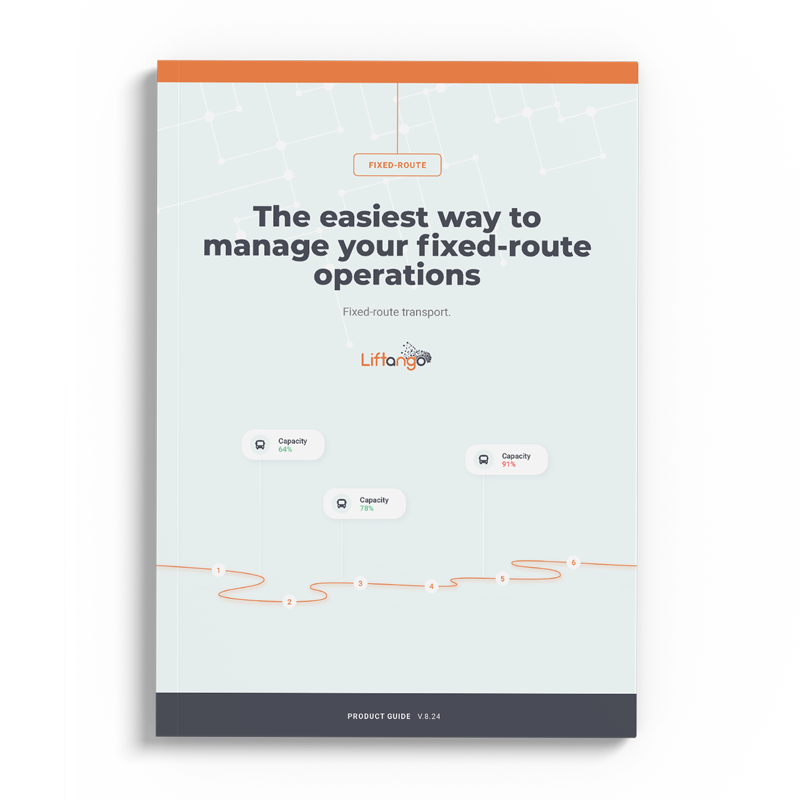
Want to learn more about Liftango?

Frequently Asked Questions
Find answers to the most common questions below.
What is fixed route transit software?

Fixed-route transit software is a digital platform used to plan, manage, and operate transport services that run on predefined routes and schedules. These services can include public transport, shuttle services, or other regularly scheduled transport operations that follow consistent routes regardless of variations in passenger demand.
The software typically supports functions such as route and timetable planning, vehicle tracking, schedule adherence monitoring, fare or access management, and passenger information. By enabling reliable and predictable operations, fixed-route transit software helps operators deliver consistent services while improving efficiency and service visibility across a wide range of transport use cases.
How does Liftango’s platform improve scheduling?
Liftango’s platform improves scheduling by providing operators with access to data-driven insights, including reporting on schedule adherence, passenger loads per vehicle, and real-time vehicle tracking.
By analysing this operational data, bus operators can make informed decisions to optimise schedules, improve vehicle utilisation, and better align services with actual passenger demand, resulting in more efficient and reliable operations.
Can it integrate with other mobility services?
Yes, fixed-route transit platforms can integrate with other mobility services to support more connected and seamless transport networks. Integration can include connections with demand-responsive transport, first- and last-mile services, shared mobility options, and broader journey planning tools.
By enabling data and system integration, platforms such as Liftango can allow passengers to view multiple transport options via Mass integrations, within a single interface, helping them plan end-to-end journeys that combine fixed-route services with complementary mobility solutions.
Who benefits most from using this software?
Fixed-route transit software benefits both operators and passengers. Operators gain tools to optimise schedules, monitor performance, and improve overall service efficiency. Passengers benefit from these improvements through more reliable, timely, and convenient transport options, as well as increasing their visibility of real-time information on the bus location, delays and capacity - creating a better overall travel experience.