
%20(1).jpg)
The landscape for Demand-Responsive Transport (DRT) has changed dramatically in recent years.
There are many different forms and names for DRT. This article will give you the foundation for understanding what Demand-Responsive Transport is, what problems it solves and where it fits in today’s transit landscape.
We'll cover:
Also known as On-Demand Transport, Paratransit, Dial-a-Ride, Non-Emergency Medical Transport (NEMT), Microtransit or Community Transport—Demand-Responsive Transport (DRT) is a transport service characterised by a ‘reservation’ mechanism. It enables passengers to book their journey at a convenient time during normal operating hours.
Passengers can book trips through a call centre or smartphone App and can designate the pick up and drop off location and a time most convenient to them. Unlike traditional transit services, passengers do not have to conform to a fixed timetable in order to access the service.
Instead, modern-day DRT is powered by sophisticated algorithms that coordinate the scheduling of passengers, dispatch and routing of vehicles and ensure the continuous optimisation and efficiency of the service.
What is Demand-Responsive Transport (DRT)?
Demand-Responsive Transport (DRT) is a flexible, shared public transport model that doesn’t rely on fixed routes or timetables.
At Liftango, we provide a platform that uses automated scheduling and optimised routing to help transit agencies and fleet operators deliver DRT services more efficiently.
Our Demand-Responsive Transport solution gives agencies and operators the tools to design, operate, and continually optimise these services at scale.

What Problems Does Demand-Responsive Transport Solve?
Demand-Responsive Transport solves four primary problems.
Provides Transport Services for Underserved and Rural Areas
DRT enables people to access transportation in underserved areas or lack access to fixed-route public transit.
This improved the ability of community members to participate in employment and access essential services.
Mobility for the Elderly and ‘Ageing-in-Place’ Communities
For elderly members of the community who do not have access to a private vehicle, it provides a way to connect with medical, retail and other essential services.
Improves the Cost of Running Fixed Route Service
By replacing under-utilised fixed-route transit software, operators can increase patronage without the need to run additional vehicles.
Visibility to Onboard Capacity & Better Operational Data
Having access to the onboard capacity of vehicles enables operators to provide safer services when social distancing and contract tracing are required.
It also enables rapid, data-driven decisions about how many vehicles to run, and when, if demand moves beyond peak capacity.
Demand-Responsive Transport Examples
There are many types of Demand-Responsive Transport. Each with their varying degrees of responsibility.
Booking a trip within a smartphone App is the ‘new norm’. And traditional services that use website or phone bookings are becoming less prevalent.
Paratransit (NEMT, Community Transport)
This is an accessibility-enabled service that offers door-to-door transport for passengers who need additional support.
These services can be run by community groups, operators, or Transit Agencies and will use a mix of shuttles, taxis or small passenger vehicles to respond to pick-up requests.
On-Demand Public Transport
These public transport services typically service the first and last mile. They use vehicles with varying capacities to connect commuters from local pick-up points to a main corridor or mass transit line.
They will operate in a designated ‘service zone’, and passengers can book a trip via website, phone or smartphone App.
Corporate Transport
Organisations with hundreds or thousands of employees are providing better transportation demand management (TDM) services to mitigate the environmental and societal impacts of transportation and subsequent congestion.
Demand-Responsive bus services are becoming part of this mix of tactics. DRT allows organisations to provide low-cost transport to their employees and remove the cost of parking infrastructure.
Ridehail / Taxi
Taxis have been used for Demand-Responsive Transport solutions for some time now. Unfortunately, it is one of the most expensive forms of DRT.
Whilst approved passengers will have access to government subsidies to reduce their overall contribution to the cost of the trip, running low-capacity vehicles for individual trips has been proven expensive.
Ride-hail is very similar. Rather than pooling similar passenger journeys together, both ride-hail and taxi services generally provide DRT services to a single passenger at a time.
Dial-a-Ride
Dial-a-Ride is one of the earliest forms of DRT. Using older dispatch systems, operators would take booking requests over the phone and manually add them to driver manifests.
Generally operating without the support of complex routing algorithms to optimise vehicle movement, operational efficiencies are hard to realise and excess driver miles would occur.
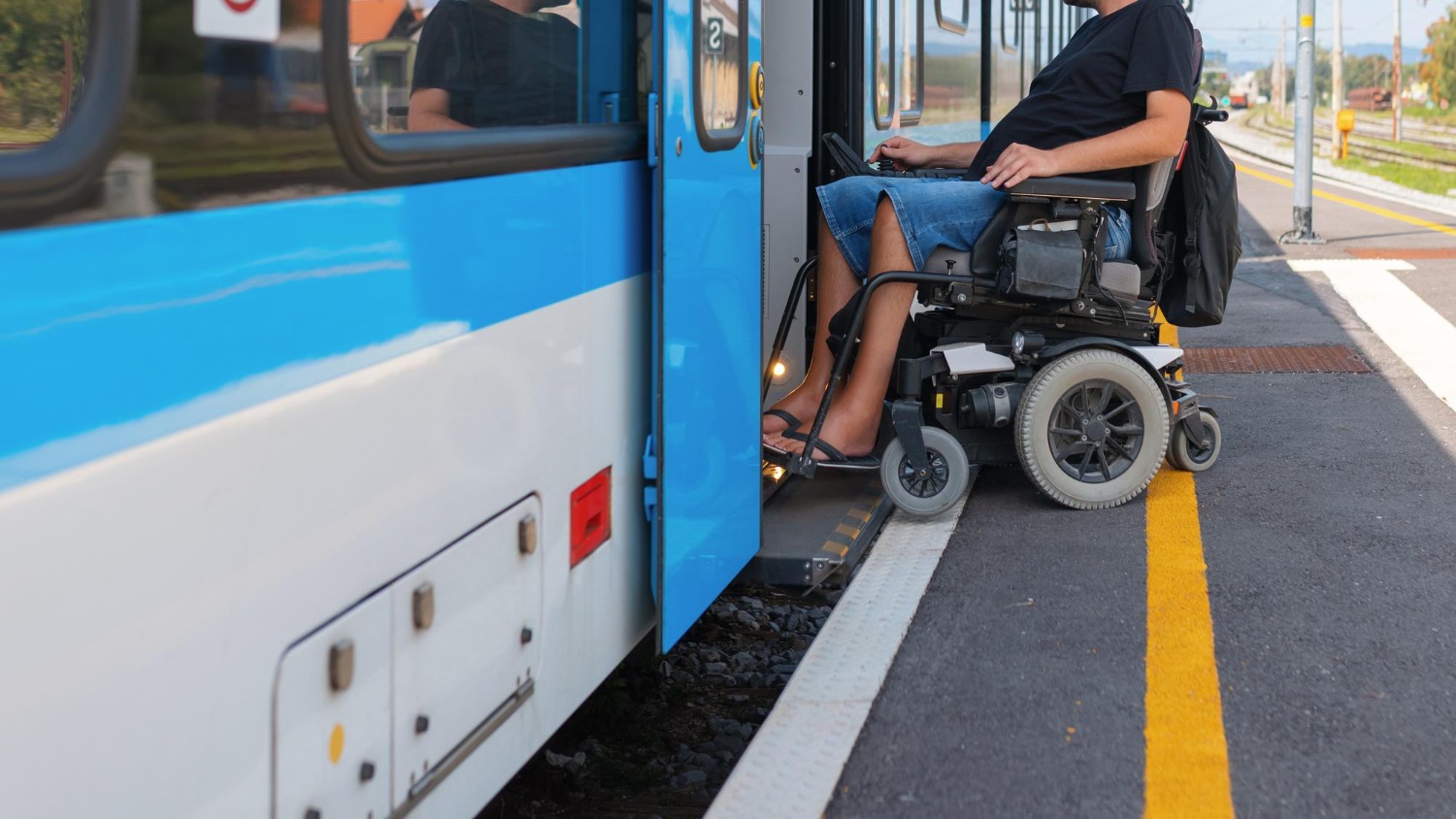
Where does DRT fit (and how can it improve access to transport)?
DRT is providing Transit Agencies and operators with a more convenient way for passengers to access their transport services. So naturally, it fits into areas of the community that have been underserved with transportation options.
Whether it be members of rural communities or burgeoning suburbs without transit infrastructure, it’s allowing network planners to rethink how people access main corridors and expand their reach within sprawling or sparsely populated communities.
By giving the passenger the power to designate where a pickup location should be, it allows them the convenience of access. It lets people connect with other mass transit options and increases the overall network use.
As a result, it also lowers the overall cost of servicing passengers across an entire network.
How Does a Demand-Responsive Transport System Work?
A Demand-Responsive Transport system works by aggregating passenger demand into clusters, then dispatching vehicles to those locations.
From there, once the system has allocated vehicles, complex routing and scheduling occur and pick up and drop off times are calculated. All this without the need for human intervention.
At the heart of a Demand-Responsive Transport operation is the routing and matching engine. This is a series of algorithms that calculate a route based on vehicle location, time, passenger origin & destination.
This is how the system is able to function the way it does. Seamlessly taking multiple incoming requests, matching them to a vehicle, and then providing navigation support for the drivers to deliver passengers at their destination on time.
The difference between previous demand-responsive models and today's is the ability to package multiple services into one platform. Now the passenger, driver and operations team can easily access the one system and efficiently achieve what they need to:
Passenger:
- Pick up requested
- Passengers allocated to vehicles
- Reminder notification prior to pick up
- Driver arrival notification
- Drop off successful
Driver:
- Pick up request accepted
- Navigation to pickup address
- Confirm Pick up
- Navigation to destination
- Confirm Drop off
Operations:
- 360-degree view of operations
- Passenger / driver support (if needed)
- Confirm bookings
- Confirm drop offs
Why Are Operators and Transit Agencies Moving to DRT?
In cases where fixed-route bus services are too expensive to operate or lack the ability to service geographical areas effectively, Demand-Responsive Transport is flourishing.
Operators and Transit Agencies are moving to Demand-Responsive Transport for the simple fact that it helps to improve their offering.
Until now, operators may have had multiple software platforms to manage their operations. With changes in transportation technology, it’s now possible to consolidate this cost and provide DRT, fixed-route, community transport, and dial-a-ride services all from one platform. Operators are realising this more and are making the change each day.
No doubt, fixed-route and mass transit options will always have their place, but Demand-Responsive Transport is giving passengers another option that is affordable and convenient.
For Operators, it provides another way to increase access points to a transit network and provide greater efficiency for feeder services of main corridor lines.
It goes a long way to provide much-needed equity in our transport networks and give people who do not want to bear the cost of private vehicle ownership an alternative and sustainable mode of transport.
And especially now, as more of our population moves into the elderly bracket, it is providing those who choose to age-in-place or require assistance a convenient way to connect them to essential services.

Learn More About Demand-Responsive Transport
At Liftango, we’re helping agencies and operators rethink how public transport works, using demand-responsive services to connect more people to jobs
Our platform lets you design, test, and scale flexible DRT services that fit your network, your policy goals, and your budget.
Ready to explore what demand-responsive transport could look like in your area? Contact us to learn more.

FAQs
H3 - What is demand-responsive transport, and how does it differ from traditional transport?
Demand-responsive transport is a flexible shared service where vehicles move according to real-time passenger requests, rather than a fixed timetable. Riders book trips through our app or call center, and Liftango’s platform groups compatible journeys and builds efficient routes in real time. This reduces empty running, improves reliability, and makes services more cost-effective compared to traditional fixed-route buses.
H3 - What regions are best suited for demand-responsive transport?
Demand-responsive transport is ideal where demand is spread out or irregular. This includes rural and peri-urban areas, low-density suburbs, business parks, hospital and university campuses, and evening or weekend services. In these places, frequent fixed routes are hard to justify. Liftango helps agencies design services that improve coverage and first-and last-mile access without overspending on underutilised routes.
H3 - What are the potential challenges in implementing a demand-responsive system?
Key challenges in a demand-responsive system include designing the service area, setting realistic wait times, integrating with existing public transport, and explaining the change to riders and drivers. Agencies may also need to manage regulatory rules, data reporting, and access for people without smartphones. Liftango supports each step with planning tools, configurable booking options, and real-time operational dashboards so partners can launch and scale confidently.
