
%20(1).jpg)
The focus on sustainable transport is increasing, and individuals, businesses, and entire communities can all contribute to lowering the negative impacts of transport while benefiting from cleaner air, healthier living environments, and more efficient ways to travel.
Join us to explore what sustainable transport really means, how it differs from conventional mobility, why it plays such a major role in environmental and social outcomes, and how technology is accelerating its adoption across workplaces, cities, and transport networks worldwide.
Globally, the transport sector contributes roughly 13 - 27% of greenhouse gas emissions, and pollutants such as nitrogen dioxide are released from fuel combustion in transport.
What is Sustainable Transport?
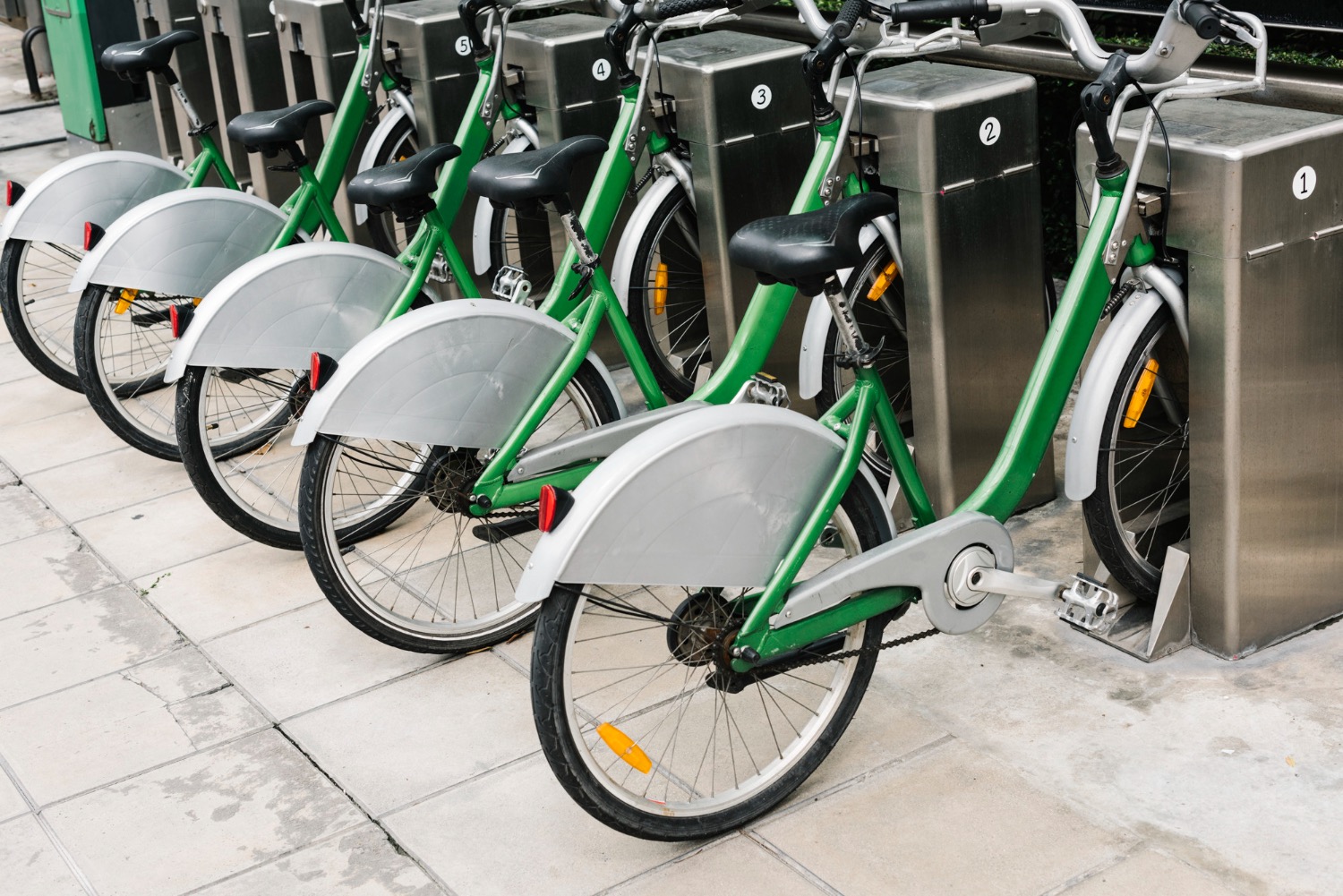
Sustainable transport refers to transport systems, such as walking and cycling networks, public transit, and electric road vehicles, that operate with minimized environmental impact.
These systems aim to lower greenhouse gas emissions, reduce air pollution, improve energy and resource efficiency, and limit damage to ecosystems.
How is Sustainable Transport Defined Today?
When we define sustainable transport today, we consider vehicles, energy sources, infrastructure, land use, policy frameworks, and human behavior together rather than in isolation.
Sustainable transport is also measured through its efficiency, safety, affordability, emissions impact, and equitable access.
Since sustainability is about meeting present needs without compromising the ability of future generations to meet theirs, a transport system should be:
- Efficient, to reduce energy and resource use,
- Safe, to protect lives and support social well-being,
- Affordable, so it benefits all people and communities,
- Low-emission, to minimize environmental impact and limit climate change.
What Makes Transport Sustainable vs Conventional Mobility?
Conventional mobility is the typical way people and goods move today, relying heavily on private cars, trucks, airplanes, and fossil fuels.
It prioritizes speed, convenience, and short-term economic growth, often without considering environmental impact or long-term social effects.
Sustainable transport, on the other hand, uses cleaner energy, encourages public transit, cycling, and walking, and makes logistics more efficient.
It takes a long-term view, focusing on benefits for people, communities, and the planet instead of just convenience or fast growth.

Why Does Sustainable Transport Matter Globally and Locally?
Sustainable transport matters because it directly affects the environment, public health, and economic stability.
Globally, the transport sector contributes roughly 13 - 27% of greenhouse gas emissions, and pollutants such as nitrogen dioxide are released from fuel combustion in transport.
Alongside emissions from energy production, waste management, agriculture, and urban planning, transport is a large contributor to air pollution, which is one of the greatest environmental risks to child health and is associated with around 6.7 million premature deaths each year. Moving towards sustainable transport can reduce these global impacts by cutting emissions at the source.
Locally, sustainable transport helps cities become healthier, safer, and more livable. Every individual in an urban or rural area can benefit from sustainable transport, which can be reflected in improvements to their physical and mental health.
For example, shifting to eco-friendly transportation reduces air pollution, but also lowers noise pollution. Exposure to excessive noise can have a range of health effects, including sleep disturbances, cognitive impairment in children, tinnitus, and stress-related mental health challenges, so lowering overall noise levels can improve the general well-being of all ages.
Sustainable transport also promotes physical activity through walking and cycling, which helps reduce cardiovascular disease risk and obesity rates.
What Are the Main Types of Sustainable Transport?
The primary types of sustainable transport include:
Carpooling
Carpool solutions involve multiple people sharing a single vehicle for their commute or trip.
This reduces the total number of cars on the road, cutting greenhouse gas emissions and lowering traffic congestion.
Demand-Responsive Transport
Demand-responsive transport (DRT) is a flexible, on-demand service where vehicles adjust routes and schedules based on real-time passenger requests. It’s particularly useful in areas with lower population density or where public transit is limited, offering efficient, accessible, and cost-effective alternatives to private cars.
Fixed-Route Transport
Fixed-route transport includes buses, trams, and trains that operate along predetermined routes on a regular schedule.
When paired with clean vehicle adoption and fixed-route transit software, these systems provide predictable, low-emission mobility, which encourages people to use public transport.

How Does Sustainable Transport Apply to Workplaces and Cities?
Here's how sustainable transport shapes how people move in workplaces and cities:
Workplaces
Sustainable transport can be applied at workplaces when businesses provide solutions such as carpool programs, incentives for cycling or public transit, on-demand shuttle services, or flexible remote working options.
These strategies lower commuting emissions, reduce parking demand, and promote employee health through active travel, such as walking or cycling.
Cities
In cities, sustainable transport can be implemented through electric buses and trains, demand-responsive transit in underserved areas, and urban planning that prioritizes walking and cycling infrastructure.
These systems can improve access to jobs, education, and services, while supporting economic growth and creating more livable urban spaces.
How Can Businesses Reduce Their Transport Emissions Effectively?
See how your business can reduce transport emissions to contribute to sustainable transport within your area:
Reduce Single-Occupancy Vehicle Commuting
Encourage employees to share rides through carpool schemes to reduce the number of single-occupancy vehicles.
If employees are unsure about carpooling options, create a bulletin board to match staff who live nearby and have similar schedules.
Optimise Commute Patterns and Transport Routes
Cut fuel use and emissions by planning deliveries, business trips, and employee commutes more efficiently.
Using GPS or route-planning apps, businesses can combine multiple trips into fewer journeys, saving time, money, and reducing their environmental impact.
Introduce Shared Transport
Offer options such as company shuttles, demand-responsive transport solutions, or incentives for public transit and cycling. Providing monthly transit passes or subsidized bike rentals can make these options easier for staff to use.
Measure, Track, and Report Transport Emissions
The carbon footprint of your business transport, including travel, deliveries, and commuting, should be monitored to identify high-impact areas.
For example, keeping a spreadsheet of vehicle mileage and fuel use can help quantify monthly emissions.
Gathered data can be used to generate reports that show trends, highlight areas for improvement, and communicate progress to employees, stakeholders, or customers, thereby making the business’s sustainability efforts more transparent.

How Does Sustainable Transport Support ESG and Net Zero Targets?
Here’s how sustainable transportation can support ESG and Net Zero goals:
Reduction of Scope 3 Commuting Emissions
Employee commuting and business travel often fall under Scope 3 emissions, which are greenhouse gas emissions that originate from business sources not directly owned or controlled by an organization.
Since Scope 3 emissions are generated outside of a company’s direct operations, they can be difficult to control.
However, by implementing sustainable transport solutions, businesses can reduce these emissions and lower their overall carbon footprint.
Measurable Progress Toward Net Zero Goals
Sustainable transport provides concrete ways to cut emissions, which can be tracked, measured, and reported.
Every reduction in fuel use or shift to electric or shared mobility contributes directly to a business’s net-zero targets, helping achieve a neutral carbon footprint.
Stronger ESG Reporting and Compliance
Tracking and reporting transport emissions strengthens a business’s environmental, social, and ESG disclosures.
Sharing clear data on commuting and fleet emissions demonstrates that a business is taking responsibility, increasing its trust and credibility.
Positive Social and Workforce Impact
Sustainable transport programs also deliver tangible benefits for employees, enabling healthier, less stressful commutes.
For the wider community, these efforts help businesses contribute to cleaner air, less traffic, and safer streets. When these initiatives are communicated effectively, they can also improve a business’s reputation.
How Technology Accelerates Sustainable Transport Adoption
Explore how transportation technology is making systems more efficient and easier to use:
Smarter Route Planning and Higher Vehicle Occupancy
Smart route planning uses technology to determine the best paths for vehicles.
Instead of following fixed routes or guessing where to go, software can map the quickest, most efficient route for picking up and dropping off passengers or deliveries.
This also helps increase vehicle occupancy, ensuring cars, buses, or vans transport more passengers per trip rather than operating largely underused.
Real-Time Data and Performance Tracking
Transport systems can now collect data as events occur, such as vehicle locations and capacities, or trip lengths.
Such data improves operators' ability to fix problems immediately, adjust schedules, and respond to unexpected demand.
On-demand transportation works especially well with this approach, as the system can dynamically adjust routes and pick-ups based on real-time passenger demand.
Improved User Experience
Technology makes sustainable transport easier to use and more convenient. Passengers can book rides from their phones, view live arrival times, and pay digitally.
By making eco-friendly transportation simple and dependable, people are more inclined to choose it instead of driving their own car.
Scalable Deployment
Advanced systems, such as autonomous vehicles, make it easier to expand sustainable transport services quickly and efficiently.
Understanding how mobility in transportation drives sustainability allows cities and businesses to scale programs while keeping them reliable, safe, and user-friendly.
Because these vehicles can operate with minimal human intervention, fleets can be deployed or adjusted to meet changing demand without adding staffing or coordination challenges.

What Are the Future Trends of Sustainable Transport?
See what we expect in the world of sustainable transportation in the ear future:
Growth of Shared Transport Models
Due to the rising costs of public transport and car ownership, more people are using shared transport options, like ride-sharing and carpooling.
There’s also growing awareness of environmental impacts, so more individuals are choosing shared transport as a practical way to reduce their carbon footprint.
As a result of these shifts in attitudes and perceptions, shared transport models are becoming a mainstream option for commuting and short-distance travel.
Expansion of Demand-Responsive Transport
Demand-responsive transport is growing because advances in mobile apps, GPS, and real-time tracking make it easier to match vehicles with riders on short notice.
As people expect more flexibility in their travel, cities and operators are increasingly adopting these services to meet shifting demand.
Emergence of Autonomous Shared Vehicles
Autonomous vehicles are becoming more prevalent as self-driving technology improves and regulatory frameworks start to allow limited deployments.
Rising labor costs, safety concerns, and the push for scalable transport solutions are encouraging businesses to experiment with fleets of driverless shared vehicles.
Increased Use of Mobility Data and Analytics
The use of mobility data and analytics is expanding as better sensors, GPS, and cloud computing enable real-time tracking and analysis of travel patterns.
As cities and providers face growing demand and more complex transport networks, they will need to rely more on data-driven insights to optimize routes and respond more effectively to changing travel needs.
Learn More About Sustainable Transport
If you want to learn more about the technologies and innovations driving more sustainable transport, our technology and sustainable transport whitepaper explores the topic in depth.
It looks at how shared mobility solutions can improve access, save money, support the environment, and what’s next for mobility technology.
Contact us to see how Liftango can help your organization implement effective transport systems and support your sustainability goals.

FAQs
What are the main benefits of sustainable transport?
The top benefits of sustainable transport include:
- Improved air quality
- Reduced greenhouse gas emissions
- Lower noise pollution
- Lower commuting costs
- Safer and more accessible streets
- Healthier lifestyles
How can individuals contribute to sustainable transport?
Individuals can choose low-emission transport options such as walking, cycling, public transit, or carpooling to contribute to sustainable transport efforts. Even small changes, like choosing shorter trips or participating in carpooling, can add up for the average person.
What challenges does sustainable transport face?
Sustainable transport comes with several challenges, such as:
- Heavy reliance on fossil fuels makes the switch to low-emission options harder.
- Gaps in policies or regulations that slow down green transport initiative
- Limited infrastructure in some areas, like charging stations or safe bike lanes.
- Higher upfront costs for electric vehicles.
- Low awareness of environmental issues can make individuals less inclined to change their travel habits
How does sustainable transport impact climate change?
Transport produces greenhouse gases that contribute to climate change. Sustainable transport helps cut these emissions by using cleaner energy, slowing the pace of climate change and reducing harmful environmental impacts.
